




What is the difference between a manual and a CNC surface grinding machine in terms of operation difficulty?
 Oct 31, 2025|
 In the realm of precision machining, surface grinding machines play a pivotal role in achieving high - quality finishes on workpieces. Among them, manual and CNC (Computer Numerical Control) surface grinding machines are two commonly used types. As a supplier of CNC Surface Grinding Machine, I have witnessed firsthand the differences between these two types of machines, especially in terms of operation difficulty.
Operation of Manual Surface Grinding Machines
Manual surface grinding machines are the traditional workhorses in many workshops. They rely on the operator's skill and experience to control every aspect of the grinding process.
Setup and Preparation
The first step in operating a manual surface grinding machine is setting up the workpiece. The operator must precisely position the workpiece on the machine's table using clamps or other fixtures. This requires a good understanding of the workpiece's geometry and the grinding requirements. For example, if the workpiece has an irregular shape, the operator needs to find the best way to secure it to ensure stable grinding.
Next, the grinding wheel needs to be selected and installed. Different grinding wheels are suitable for different materials and grinding tasks. The operator has to make this decision based on their knowledge and past experience. Installing the grinding wheel also demands careful attention to ensure it is properly centered and tightened. Any imbalance in the grinding wheel can lead to poor surface finish and even damage to the machine.
Grinding Process
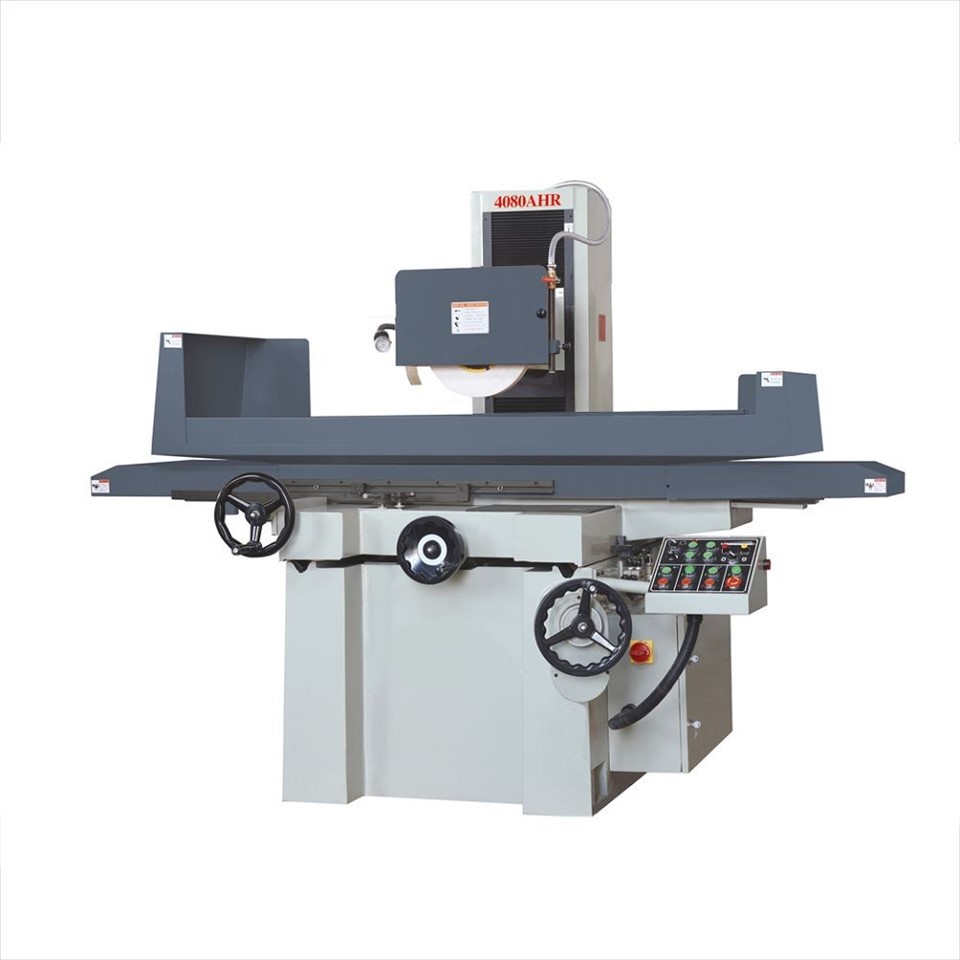
During the grinding process, the operator controls the movement of the grinding wheel and the workpiece manually. They use handwheels to move the table along the X and Y axes and the grinding head along the Z - axis. This requires a high level of dexterity and a sense of touch. The operator has to continuously adjust the feed rate and depth of cut to achieve the desired surface finish and dimensional accuracy.
For instance, when grinding a flat surface, the operator needs to ensure that the grinding wheel moves evenly across the workpiece. They have to be aware of the grinding force and adjust the movement accordingly. If the grinding force is too large, it may cause excessive material removal and damage the workpiece; if it is too small, the grinding efficiency will be low.

Monitoring and Quality Control
Throughout the grinding process, the operator is responsible for monitoring the surface finish and dimensional accuracy of the workpiece. They use measuring tools such as micrometers and calipers to check the dimensions at regular intervals. If the dimensions deviate from the required values, the operator has to make immediate adjustments to the grinding process.
Detecting surface defects such as scratches or unevenness also depends on the operator's visual inspection skills. They need to be able to identify these issues early and take corrective actions, which may involve changing the grinding wheel or adjusting the grinding parameters.
Operation of CNC Surface Grinding Machines
CNC surface grinding machines, on the other hand, offer a more automated and precise way of grinding.
Programming
The initial step in operating a CNC surface grinding machine is programming. The operator creates a program that contains all the information about the grinding process, including the path of the grinding wheel, the feed rate, the depth of cut, and the number of passes. This is done using a computer - based programming system.
Although programming may seem complex at first, modern CNC systems are designed to be user - friendly. Many come with pre - programmed templates and graphical interfaces that make it easier for operators to create programs. For example, an operator can simply select a standard grinding pattern from the template library and then modify it according to the specific requirements of the workpiece.
Setup and Preparation
Similar to manual machines, the workpiece needs to be set up on the machine table. However, CNC machines often have more advanced fixturing systems that can ensure more accurate and repeatable positioning. The operator only needs to place the workpiece in the designated position, and the machine can automatically adjust the clamping force to secure it.
The grinding wheel installation process is also more straightforward. The machine can provide instructions on the correct installation procedure, and some advanced machines even have automatic wheel - balancing systems, which eliminate the need for the operator to manually balance the grinding wheel.
Grinding Process
Once the program is loaded and the setup is complete, the CNC surface grinding machine runs the grinding process automatically. The machine controls the movement of the grinding wheel and the workpiece based on the programmed instructions. This means that the operator does not need to manually control the axes during the grinding process.
The machine can maintain a consistent feed rate and depth of cut throughout the grinding process, which results in a more uniform surface finish and higher dimensional accuracy. For example, when grinding a complex - shaped workpiece, the CNC machine can follow the programmed path precisely, achieving a level of precision that is difficult to achieve with a manual machine.
Monitoring and Quality Control
While the machine is running, the operator can monitor the process through the machine's control panel. The panel displays information such as the current position of the grinding wheel, the feed rate, and the cutting force. If any abnormal conditions occur, such as a sudden increase in cutting force, the machine can automatically stop and alert the operator.
In addition, CNC machines can be equipped with in - process measurement systems. These systems can measure the dimensions of the workpiece during the grinding process and make real - time adjustments to the grinding parameters if necessary. This ensures that the workpiece meets the required quality standards without the need for frequent manual measurements.
Comparison of Operation Difficulty
Skill Requirements
Operating a manual surface grinding machine requires a high level of manual skills and experience. The operator needs to have a deep understanding of the grinding process, including material properties, grinding wheel selection, and manual control techniques. It may take years of practice for an operator to become proficient in operating a manual machine.
In contrast, operating a CNC surface grinding machine requires more knowledge of programming and computer - based control systems. While programming may seem daunting at first, with proper training, an operator can quickly learn how to create and modify programs. The machine's automated features also reduce the need for high - level manual skills.
Learning Curve
The learning curve for a manual surface grinding machine is relatively steep. New operators need to spend a significant amount of time learning how to use the handwheels to control the machine, how to select the appropriate grinding wheel, and how to monitor the grinding process. They also need to gain experience in dealing with various types of workpieces and grinding tasks.
For a CNC surface grinding machine, the initial learning may focus on programming and understanding the machine's control panel. However, once the operator becomes familiar with these aspects, they can quickly start operating the machine. The machine's automated features and pre - programmed templates also make it easier for new operators to get started.
Error - Prone Nature
Manual surface grinding machines are more error - prone due to the reliance on human control. Small mistakes in handwheel operation, such as over - or under - feeding, can lead to poor surface finish or dimensional inaccuracies. In addition, human fatigue can also affect the quality of the grinding process over time.
CNC surface grinding machines are less error - prone because the grinding process is controlled by a pre - programmed computer system. As long as the program is correct and the machine is properly maintained, the risk of human - induced errors is significantly reduced.
Conclusion
In conclusion, the operation difficulty of manual and CNC surface grinding machines differs significantly. Manual machines require a high level of manual skills and experience, have a steep learning curve, and are more error - prone. On the other hand, CNC machines are more user - friendly in terms of operation, with a relatively shorter learning curve and lower error rates.
As a supplier of CNC Surface Grinding Machine, we offer High Quality Surface Grinder and Automatic Surface Grinder that can greatly simplify the grinding process and improve productivity. If you are looking for a reliable and efficient surface grinding solution, we invite you to contact us for further discussion and procurement. Our team of experts is ready to provide you with the best advice and support to meet your specific needs.
References
- Schey, J. A. (2000). Introduction to Manufacturing Processes. McGraw - Hill.
- Kalpakjian, S., & Schmid, S. R. (2013). Manufacturing Engineering and Technology. Pearson.