

 Language
 Language
CNC Control
CNC stands for Computer Numerical Control, and most machining centers are equipped with Computer Numerical Control (CNC) systems that can accurately control the motion and operation of machines.
Multiple Axes
Machining centers often have multiple axes (typically 3 to 5) that enable complex and intricate machining tasks.
Tool Changers
Automatic tool changers allow the machine to switch between different cutting tools quickly, increasing efficiency and reducing downtime.
High Precision and Speed
Advanced machining centers provide high accuracy and speed, essential for producing parts with tight tolerances.
Versatility
They can perform a variety of operations without the need for manual intervention, reducing the need for multiple machines.
Vertical Machining Center (VMC)
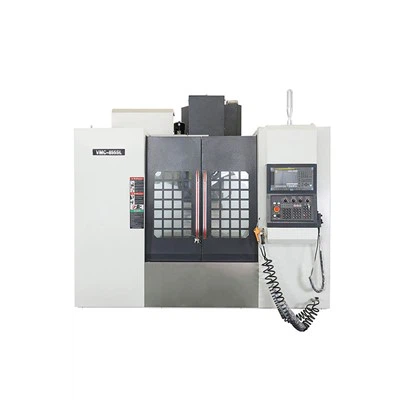
The vertical machining center, commonly known as VMC, is a type of vertical milling machine that operates. Its spindle moves up and down, allowing the cutting tool to make precise cuts in various directions.
Horizontal Machining Center (HMC)
Unlike the vertical machining center, the horizontal machining center operates horizontally, with its spindle positioned horizontally.
Five-Axis Machining Center
The five-axis machining center is a highly advanced VMC machine offering greater flexibility and precision. It can move the cutting tool along five axes simultaneously, allowing complex shapes and angles to be easily achieved.

High-Speed Machining Center
The high-speed machining center is designed to perform machining operations at significantly higher speeds than conventional machines. It utilizes advanced technology to reduce cycle times while maintaining accuracy and surface finish quality.
Double Column Machining Center
The double-column machining center features a robust structure with two columns supporting the crossbeam on which the spindle moves horizontally. This design provides enhanced stability and rigidity, making it suitable for heavy-duty cutting operations on large workpieces or molds.
Automotive Industry
In the automotive sector, machining centers are essential for producing a wide array of parts, including engine components, gearboxes, chassis, brake systems, and frames. They enable the efficient fabrication of intricate parts, contributing to advancements in fuel efficiency, performance, and safety.
Aerospace Industry
The aerospace industry relies heavily on machining centers for crafting complex, high-precision parts. These include turbine blades, fuselage components, landing gear, and avionic enclosures. The utilization of advanced machining technologies ensures adherence to stringent quality standards and regulations in this safety-critical field.
Medical Industry
Machining centers in the medical industry are vital for manufacturing various devices and equipment. From surgical instruments to prosthetics and implants, the high precision offered by these centers ensures patient safety and effectiveness in medical treatments.
Oil and Gas Industry
The oil and gas sector employs machining centers for creating diverse components essential for exploration, drilling, and production activities. This includes the fabrication of valve bodies, drilling tools, pump parts, and riser systems, all designed to withstand extreme environmental conditions.
Electronics Industry
Machining centers play a crucial role in the electronics industry for the fabrication of parts used in electronic devices. This involves the precision crafting of connectors, housings, heat sinks, and semiconductor components. These parts are fundamental to various products such as smartphones, computers, and other consumer electronics.
Marine Industry
In the marine industry, machining centers are utilized to produce components for ships, submarines, and offshore platforms. This includes propellers, engine parts, hydraulic systems, and structural elements. The robustness and accuracy of machining centers ensure the durability and performance of marine vessels.
Energy Industry
The energy sector leverages machining centers in the manufacturing of components for renewable energy systems and traditional power plants. Wind turbine blades, solar panel frames, hydroelectric turbine components, and nuclear reactor parts are examples of applications that demand precision machining.
Construction Industry
Machining centers are employed in the construction industry to manufacture heavy equipment components and structural elements. This involves the creation of gears, joints, bearings, and other parts essential for machinery such as cranes, excavators, and bulldozers.
Before the vertical machining center is operated, wear all the labor protection products, lubricate and maintain as required, and check the oil level of each lubricating oil.
When the vertical machining center is clamping the workpiece, it should be lightly placed to prevent the collision and hit the work surface. When the workpiece is heavy, the load capacity of the machine table should also be verified, and the overload operation is not allowed.
After the vertical machining center is started, check the movement of the spindle, the worktable in all directions and whether the pressure indication tables are normal, and whether there are abnormal noises.
The machining program should be checked before it can be operated. When using the high-speed function, confirm the matching of the tool.
During the processing, always pay attention to whether the motion and processing status of the vertical machining center is normal and encounter abnormal phenomena. When noise and alarm occur, stop the inspection immediately and continue processing after troubleshooting.
When there are too much iron filings in the chip flute, clean it first and then open the chip conveyor.
The operators of the new vertical machining center should be familiar with the machine performance, operation methods and precautions, and only under the guidance of the relevant personnel.
After the workpiece is finished, clean the workbench, wipe and lubricate the machine, clean the surrounding environment, and keep the site clean.
The control system must be turned off before the main power of the machine is turned off; the emergency stop switch is not used in the non-emergency state.
Before going to work every day, you should fill in the operation record of the machine tool and make the handover.
Suzhou Longkai established in 2008,we're a professional CNC mechanical equipment enterprise with ISO certification. Longkai is integrating development, manufacturing and selling in CNC machining center, EDM drills, wire cutting machine, precision grinder, turret milling machine, etc.EDM machines--wire cutting machines,die sinker machines,EDM drills.


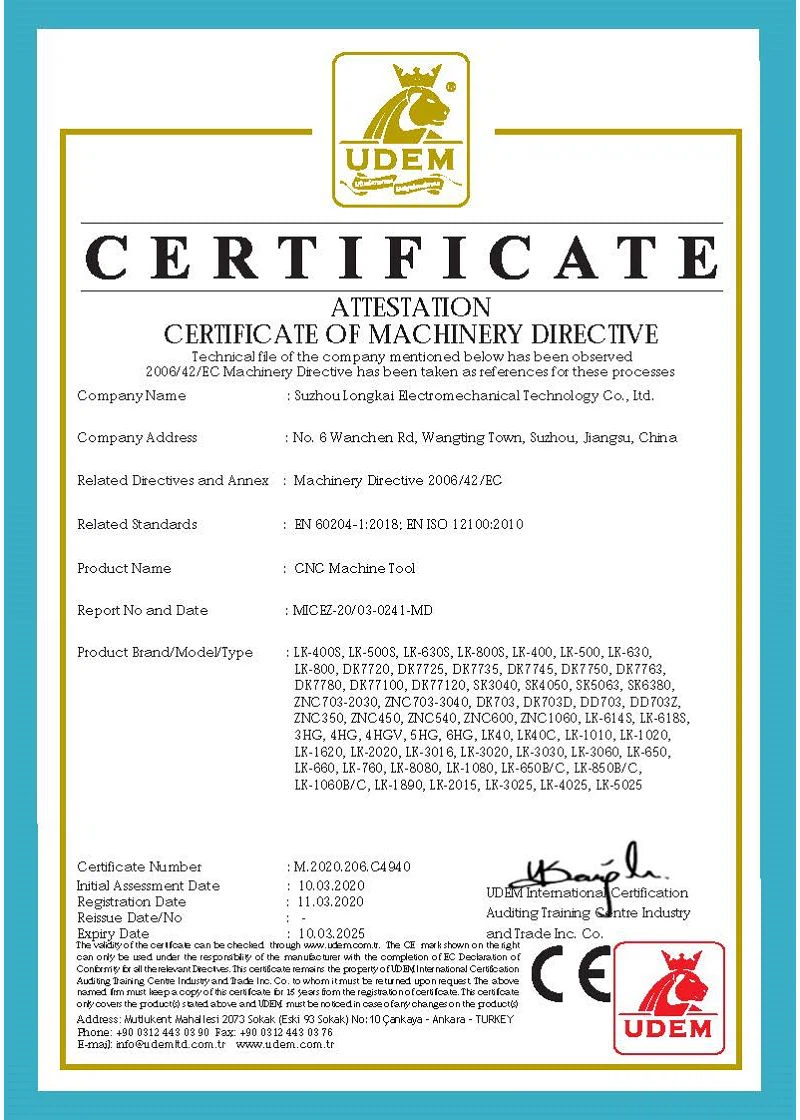

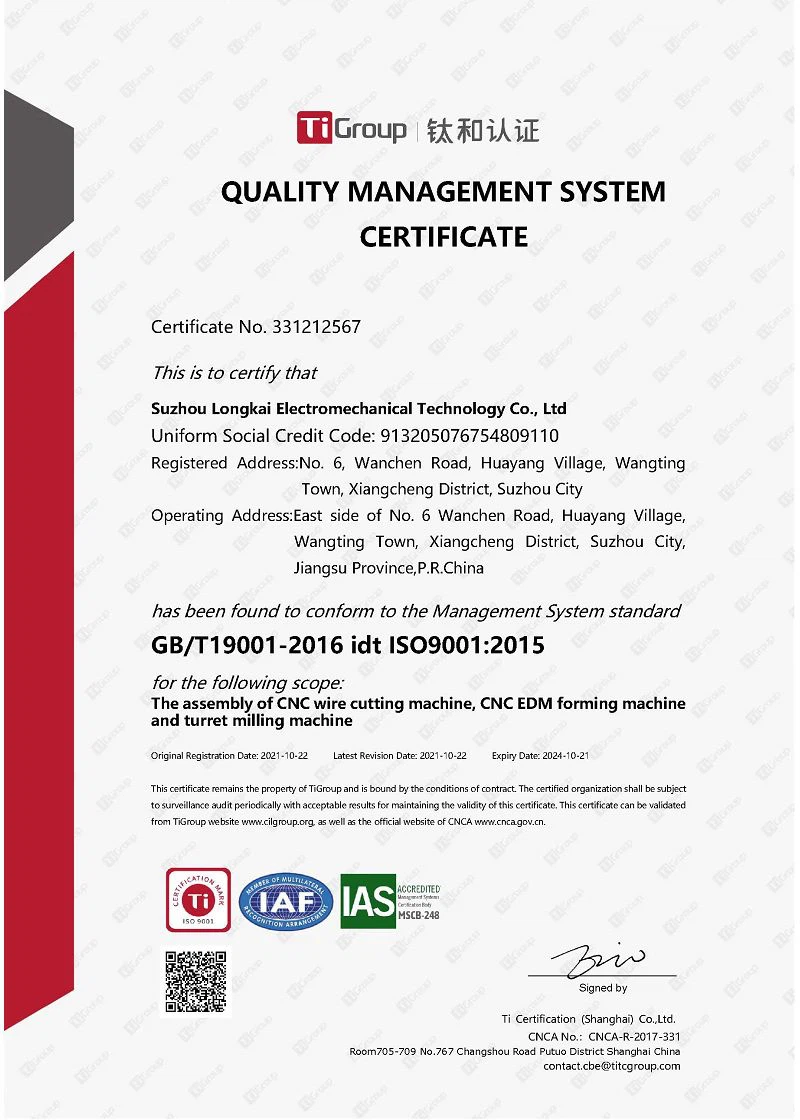
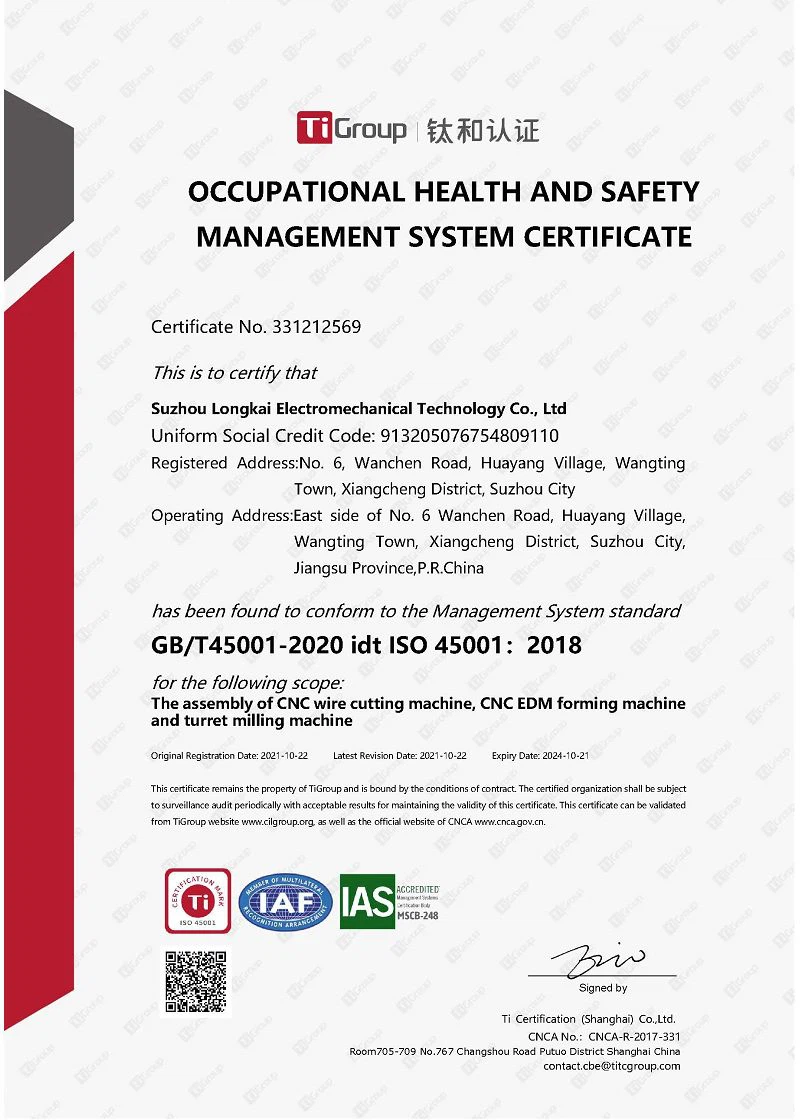

As one of the most professional vertical machine center manufacturers and suppliers in China, we're featured by quality products and good price. Be free to wholesale discount vertical machine center in stock here and get quotation from our factory. Contact us for customized service.
Vertical Machining Center, vertical machine center, Heavy Duty CNC Milling Machine Center(0/10)
